Can Scratched Hardwood Floors Be Repaired Without Replacing Them
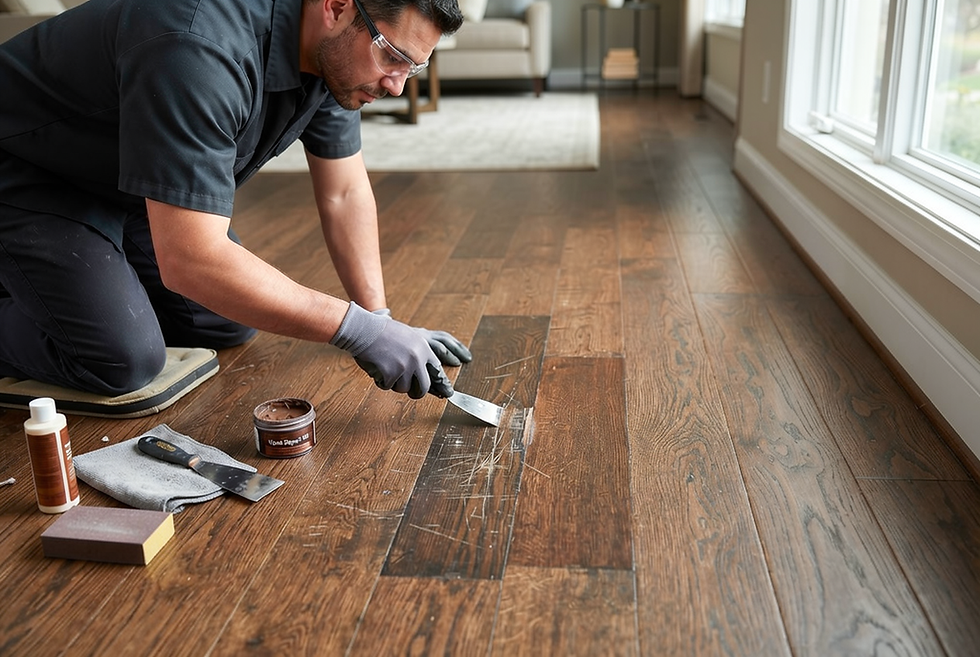
Scratched hardwood floors can make a beautiful home look older than it really is. A few marks from furniture, pets, shoes, or everyday use can leave you wondering whether you need to replace the entire floor.
The good news is that scratched hardwood floors can often be repaired without replacing the flooring.
The right type of hardwood floor repair depends on how deep the scratches are, how much of the floor is affected, the condition of the finish, and whether you have solid or engineered hardwood flooring.
Before choosing complete hardwood floor replacement, it is worth finding out whether your existing floor can be repaired, recoated, or refinished.
Can Scratched Hardwood Floors Be Repaired Without Replacing Them?
Yes, scratched hardwood floors can often be repaired without replacing the entire floor.
Not every scratch requires the same treatment. A few light scratches may only affect the protective finish and can be addressed with a touch-up or recoating. Deeper scratches that reach the wood may need sanding and refinishing.
If only one or two boards have severe damage, replacing those individual boards may be enough. You may not need to replace an otherwise healthy hardwood floor simply because a small section is damaged.
The main question is: How deep are the hardwood floor scratches?
How to Tell How Deep Your Hardwood Floor Scratches Are
Before choosing a hardwood floor scratch repair method, look closely at the damaged area.
Light Surface Scratches
Light scratches usually affect the protective finish rather than the wood underneath.
You may see thin lines, dull marks, or light scuffs across the surface. If the wood itself is not damaged, the repair can be relatively simple.
Depending on the finish, possible solutions include:
Hardwood floor touch-up products
Minor spot repair
Finish repair
Recoating
Scratches That Reach the Wood
A deeper scratch may go through the protective finish and into the stained wood.
These scratches are usually more noticeable and may appear lighter than the surrounding flooring.
Hardwood floor repair may involve light sanding, color matching, staining, and applying a new protective finish.
Deep Scratches and Gouges
Deep scratches in hardwood floors are more serious because the actual wood may be damaged.
You may be able to feel a groove when you run your finger across it. In some cases, unfinished wood may also be visible.
Depending on the damage, deep scratch repair may require wood filler, sanding, stain matching, and refinishing. If a board is severely damaged, replacing that board may provide a better result.
How to Repair Scratched Hardwood Floors
The best way to repair scratched hardwood floors depends on the depth and location of the damage.
Touch-Up Minor Hardwood Floor Scratches
For a few small surface scratches, a hardwood-specific touch-up product may be enough.
The product needs to match the color and finish of the existing flooring. A color that looks correct initially may appear different once it is applied, so testing the product in a less visible area is a good idea.
Repair a Small Damaged Area
If the hardwood floor scratches are limited to one small section, the entire floor may not need to be treated.
A professional flooring contractor can examine the damaged area and determine whether a localized repair can blend with the surrounding hardwood.
This approach can be useful when most of the floor is still in good condition.
Screen and Recoat the Hardwood Floor
Sometimes the floor does not have a few isolated scratches. Instead, the finish has become dull and covered with small surface marks throughout the room.
In this situation, a screen and recoat may be an option.
This process refreshes the existing finish without completely sanding the hardwood floor down to bare wood.
It is generally considered when the wood underneath is still in reasonable condition, and the damage is mainly in the existing finish.
Sand and Refinish Scratched Hardwood Floors
When scratches extend into the wood, or the finish has become heavily worn, hardwood floor refinishing may be the better solution.
Sanding removes the damaged surface and prepares the floor for a new finish. Depending on the condition of the flooring, staining may also be used to restore or change its appearance.
For homeowners with older scratched hardwood floors, refinishing can provide a significant improvement without installing completely new flooring.
Can You Repair Hardwood Floor Scratches Without Sanding the Entire Floor?
In some situations, yes.
If you have a few shallow scratches, a touch-up or localized repair may be enough. If the finish has widespread surface wear but the wood itself remains in good condition, a screen and recoat may also be considered.
However, deep scratches in hardwood floors are more difficult to repair without proper surface preparation.
Trying to cover a deep gouge with a simple touch-up product may make the damaged area more noticeable. The repair needs to address the actual depth of the damage and blend with the existing finish.
Can You Replace Only One Scratched Hardwood Floor Board?
Yes, individual board replacement may be possible when one or a few boards have severe damage.
For example, if a heavy piece of furniture has damaged one section beyond practical repair, replacing the entire hardwood floor may not be necessary.
A flooring professional can determine whether the damaged board can be removed and replaced.
The challenge is matching the replacement board to the existing floor. Differences in wood grain, age, stain, color, and finish can affect how well the new board blends into the room.
Can Scratched Engineered Hardwood Floors Be Repaired?
Engineered hardwood floor repair requires additional consideration because engineered flooring is constructed differently from solid hardwood.
Engineered hardwood contains a real-wood top layer over other layers. The thickness of this top layer varies between products.
Because of this, not every engineered hardwood floor can be sanded and refinished in the same way.
If you have scratched engineered hardwood, check the manufacturer's specifications before attempting extensive sanding. A flooring professional can also assess the remaining wear layer and recommend an appropriate repair.
Hardwood Floor Repair vs. Refinishing vs. Replacement
Homeowners often use the words repair, refinishing, and replacement interchangeably, but they describe different solutions.

This is why hardwood floor replacement should not automatically be the first option when you notice scratches.
When Should You Replace a Hardwood Floor Instead of Repairing It?
Most cosmetic scratches do not automatically mean your hardwood floor needs to be replaced.
However, replacement may make more sense when the flooring has extensive damage that cannot be effectively restored.
A professional assessment may be necessary if you notice:
Severe damage across most of the floor
Major warping or buckling
Significant moisture damage
Numerous broken or badly damaged boards
A floor that has already been heavily sanded
Structural problems beneath the flooring
Damage that cannot be corrected through repair or refinishing
If the problem is mainly cosmetic, hardwood floor repair or refinishing may be a more practical solution than replacing the entire floor.
What Causes Scratches on Hardwood Floors?
Knowing what caused your hardwood floor scratches can help you prevent them from returning.
Furniture
Dragging chairs, tables, sofas, and other furniture across hardwood can leave long scratches.
Pets
Dogs and cats can create scratches with their claws, especially when they run, turn quickly, or jump onto the floor.
Dirt and Grit
Small particles of sand, dirt, and grit can act like abrasives under shoes and gradually wear down the finish.
Shoes
Hard shoe soles and high heels can sometimes leave marks or dents on hardwood flooring.
Toys and Household Items
Heavy toys and other objects can scratch the surface when they are pushed, dragged, or dropped.
How to Prevent More Hardwood Floor Scratches
After completing a hardwood floor scratch repair, protecting the surface can help prevent new damage.
Use Furniture Pads
Place felt or suitable protective pads underneath furniture legs.
Don't Drag Heavy Furniture
Lift furniture when moving it instead of pulling it across the hardwood floor.
Clean Dirt and Grit Regularly
Regular sweeping or vacuuming helps remove particles that can scratch the finish.
Keep Pet Nails Trimmed
Keeping pet nails trimmed can reduce the chance of scratches caused by running and movement.
Use Rugs in High-Traffic Areas
Rugs and runners can help protect areas that receive heavy foot traffic.
Use Hardwood-Safe Cleaning Products
Choose cleaning products recommended for your specific hardwood finish. Using the wrong product can affect the finish and make the surface more vulnerable to wear.
Is It Cheaper to Repair or Replace Scratched Hardwood Floors?
The cost of hardwood floor repair depends on the size and severity of the damage. A few light scratches may require a relatively small repair, while deep scratches across an entire room may require sanding and refinishing.
The main options can include:
Minor scratch repair
Localized repair
Screen and recoat
Hardwood floor refinishing
Individual board replacement
Complete hardwood floor replacement
Before choosing the most expensive option, determine what your floor actually needs.
If most of the flooring is still in good condition, repairing or refinishing it may be more practical than replacing everything.
Repair or Replace? Ask These Three Questions
If you are trying to decide what to do with scratched hardwood floors, start with three simple questions.
1. How deep are the scratches?
Surface scratches are generally easier to address than deep gouges that have damaged the wood.
2. How much of the floor is damaged?
A few scratches in one area are very different from scratches covering most of the room.
3. Is the damage cosmetic or structural?
Cosmetic hardwood floor scratches may be repairable. Problems such as severe moisture damage, buckling, or structural deterioration require a more detailed assessment.
Once these factors are understood, you can make a more informed decision between hardwood floor repair, refinishing, board replacement, and complete replacement.
Frequently Asked Questions
Can scratched hardwood floors be repaired without replacing them?
Yes. Many scratched hardwood floors can be repaired without replacing the entire floor. Light scratches may need a simple touch-up, while deeper scratches may require repair, refinishing, or individual board replacement.
Can deep scratches in hardwood floors be repaired?
Yes, depending on the severity. Deep scratches in hardwood floors can sometimes be repaired through filling, sanding, staining, and refinishing. Severely damaged boards may need to be replaced.
Can hardwood floor scratches be repaired without sanding?
Some light scratches can be repaired without extensive sanding. However, deeper scratches may require sanding to properly restore the damaged surface.
Is refinishing better than replacing scratched hardwood floors?
If the flooring is structurally sound and the main problem is scratches or a worn finish, hardwood floor refinishing can be an alternative to complete replacement.
Can engineered hardwood floors be repaired?
Some engineered hardwood floors can be repaired or refinished. The available options depend on the thickness of the real-wood wear layer and the condition of the flooring.
Can you replace just one damaged hardwood floorboard?
In many cases, yes. If only one or a few boards are badly damaged, individual board replacement may be possible instead of replacing the entire hardwood floor.
How do I know if my hardwood floor needs replacement?
Extensive damage, serious moisture problems, structural issues, severe warping, or a floor that cannot be effectively repaired may indicate that replacement should be considered.
Should I repair or refinish my scratched hardwood floor?
It depends on the extent of the damage. Small isolated scratches may only need repair, while widespread scratches and worn finishes may be better suited to refinishing.
Final Thoughts
Scratched hardwood floors do not automatically need to be replaced.
In many homes, the existing flooring can be improved through a simple repair, recoating, sanding and refinishing, or replacement of only the damaged boards.
The best solution depends on the depth of the hardwood floor scratches, the amount of affected flooring, the type of hardwood, and the condition of the existing finish.
If you are unsure whether your floor needs hardwood floor repair, refinishing, or replacement, VCH Flooring can help assess the condition and determine the most practical approach.
Restoring the hardwood you already have can often be a better option than replacing a floor that still has plenty of life left.


