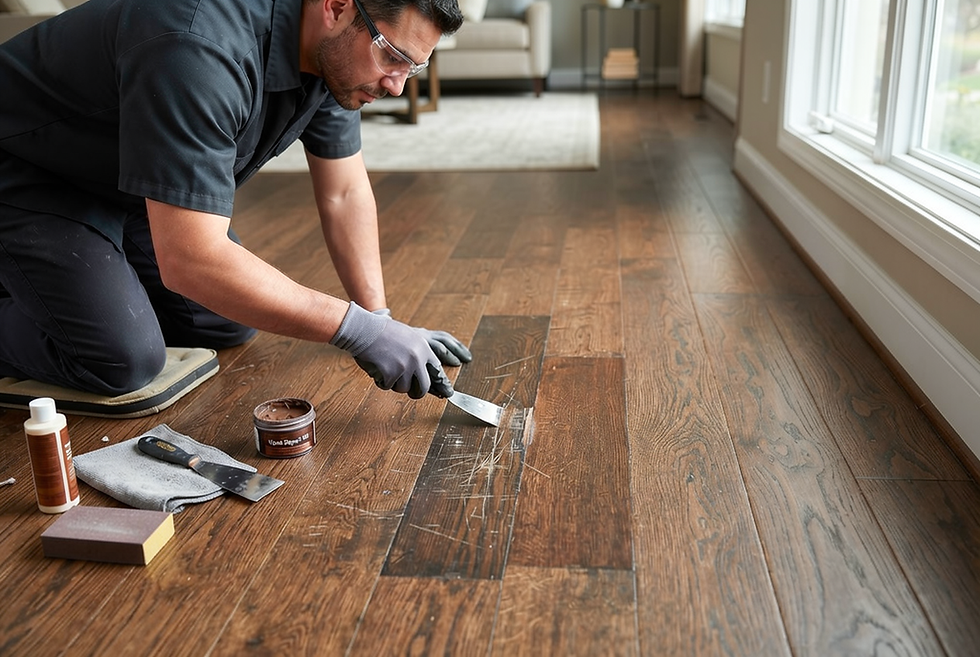
Can Water-Damaged Hardwood Floors Be Repaired


Hardwood floors add warmth, beauty, and value to a home, but water exposure can cause serious problems if it is not addressed promptly. A leaking pipe, appliance malfunction, spill, or flooding can leave hardwood flooring stained, swollen, warped, or uneven. If you are dealing with these issues, you may wonder: can water-damaged hardwood floors be repaired, or do they need to be replaced?
The good news is that many water-damaged hardwood floors can be repaired. The right solution depends on the severity of the damage, how long the wood remained wet, and whether moisture has reached the subfloor. Understanding the warning signs and available repair options can help New Jersey homeowners make an informed decision.
What Are the Signs of Water-Damaged Hardwood Floors?
Water damage does not always appear immediately. Sometimes, the floor may look normal at first, while changes develop as moisture affects the wood.
Here are some common signs to watch for:
Cupping: The edges of individual floorboards rise higher than their centers, creating a shallow, curved appearance.
Buckling: Floorboards lift away from the subfloor because of significant moisture-related expansion or pressure.
Discoloration: Dark spots, white marks, or uneven coloring may indicate moisture exposure or damage to the finish.
Swelling: Wooden planks may expand, making the floor uneven or causing boards to press against one another.
Musty odors: A persistent musty smell may indicate trapped moisture or possible microbial growth beneath the flooring.
If you notice these signs, identify the source of the water and address it promptly. Ignoring the problem can lead to more extensive damage and potentially affect the subfloor.
How Can Water-Damaged Hardwood Floors Be Repaired?
The repair process depends on the condition of the wood and the extent of moisture exposure. Before choosing a repair method, it is important to ensure the source of the water has been stopped and the affected area can dry properly.
1. Remove Water and Dry the Area
If the floor is wet, remove standing water as soon as it is safe to do so. Move rugs and furniture away from the affected area, and use appropriate drying equipment to help remove moisture.
A flooring professional may use moisture meters to check the condition of the hardwood and subfloor. Allowing the materials to dry adequately before sanding or refinishing is essential because moisture trapped inside the wood can cause further problems.
2. Repair Minor Water Stains
Some surface-level water stains may be improved through appropriate cleaning, finish repair, or refinishing. However, the treatment depends on the type and depth of the stain.
White marks may affect the finish, while darker stains can indicate deeper discoloration. Sanding and refinishing may help with certain surface issues, but it cannot correct every type of water damage.
3. Sand and Refinish the Hardwood
When the hardwood remains structurally sound and the moisture problem has been resolved, sanding and refinishing may restore its appearance. This process removes a layer of the existing surface and applies a new finish.
The suitability of refinishing depends on the wood's thickness, condition, and type of flooring. Engineered hardwood, for example, may have a limited wear layer, so it should be assessed before sanding.
Homeowners considering hardwood flooring and installation in New Jersey should also understand that refinishing an existing floor and installing new flooring are different services. A professional assessment can help determine which option is appropriate.
4. Replace Severely Damaged Boards
Some boards become too warped, cracked, or weakened to repair effectively. In these cases, replacing individual planks may be a practical solution instead of removing the entire floor.
The subfloor should also be inspected for moisture damage. If it has deteriorated or remains damp, replacing the visible hardwood alone may not solve the underlying problem.
Should You Repair or Replace Water-Damaged Hardwood Floors?
Deciding between repair and replacement depends on several factors, including the severity of the damage, the condition of the subfloor, and the overall age of the flooring.
Repair may be suitable when:
The damage is limited to a small area.
The boards remain structurally sound.
Surface stains or minor finish damage can be treated.
The moisture source has been resolved and the floor has dried adequately.
Replacement may be necessary when:
Large sections of the flooring are severely buckled or warped.
Boards are cracked, deteriorated, or no longer secure.
The subfloor has sustained significant damage.
Persistent moisture or recurring problems make repair impractical.
A professional inspection can help you understand the extent of the damage and compare the cost and practicality of repairing individual boards with replacing a larger section.
How Can You Prevent Future Water Damage?
Although accidents cannot always be avoided, a few precautions can reduce the risk of hardwood floor damage.
Repair leaking pipes, faucets, and appliances promptly.
Clean up spills as soon as possible.
Use mats near entryways to reduce moisture brought in from outside.
Keep indoor humidity within the range recommended for your flooring.
Inspect areas near dishwashers, refrigerators, sinks, and washing machines regularly.
Address signs of moisture before they spread beneath the floor.
For homeowners planning hardwood flooring and installation in New Jersey, choosing suitable materials and following the manufacturer's moisture and maintenance recommendations can also help protect the flooring over time.
When Should You Call a Hardwood Flooring Professional?
If your hardwood floors show significant swelling, buckling, widespread discoloration, or persistent musty odors, professional evaluation is a sensible next step. It is especially important to seek help when the water source is unknown, the damage covers a large area, or the subfloor may be affected.
An experienced flooring professional can assess the condition of the existing floor, check moisture levels, and explain whether drying, board replacement, refinishing, or complete replacement is the most suitable approach.
Whether you need repairs to existing hardwood or are exploring hardwood flooring and installation in New Jersey, choosing the right solution starts with understanding the condition of your floors rather than relying on appearance alone.
Conclusion
Water-damaged hardwood floors do not always need to be replaced. Minor stains and limited damage may be repairable, while severely warped boards or damaged subfloors may require more extensive work. Acting quickly, resolving the source of moisture, and getting a proper assessment can help prevent further deterioration.
If you need guidance on restoring your floors or choosing replacement options, work with an experienced Flooring Contractor in New Jersey who can assess your specific situation. VCH Flooring can help homeowners explore suitable hardwood flooring solutions based on their flooring needs and the condition of their existing floors.
Frequently Asked Questions
1. Can water-damaged hardwood floors be repaired?
Yes, many water-damaged hardwood floors can be repaired. The solution depends on the severity of the damage, how long the wood was exposed to moisture, and whether the subfloor is affected. Minor stains may need refinishing, while severely warped boards may require replacement.
2. How do you fix swollen hardwood floors?
Start by identifying and stopping the source of moisture. Remove standing water and allow the flooring to dry properly. A professional can measure moisture levels and determine whether the swollen boards can recover or need to be replaced. Avoid sanding before the wood has dried sufficiently.
3. Should I repair or replace water-damaged hardwood flooring?
Repair may be suitable for minor stains, limited damage, or boards that remain structurally sound. Replacement may be necessary if the flooring is severely buckled, deteriorated, or affected by extensive subfloor damage. A professional inspection can help determine the most practical option.
4. How long does it take for water-damaged hardwood floors to dry?
Drying time varies depending on the amount of water, wood type, humidity, airflow, and whether moisture has reached the subfloor. It may take several days or longer. Moisture readings are more reliable than appearance alone when determining whether the floor is ready for repair or refinishing.
5. When should I contact a hardwood flooring professional in New Jersey?
Contact a professional if you notice persistent swelling, buckling, dark stains, musty odors, or widespread water damage. A flooring specialist can assess the hardwood and subfloor, recommend suitable repairs, and determine whether replacement is necessary.