Solid Hardwood vs. Engineered Hardwood—Which Is Better for NJ Homes

Solid Hardwood vs. Engineered Hardwood: Which Is Better for NJ Homes?
Choosing between solid and engineered hardwood for NJ homes can be difficult, especially when both offer the natural look and warmth homeowners want. For New Jersey homes, the decision becomes even more important because seasonal humidity, heating, subfloor conditions, and room location can all affect how wood flooring performs over time.
If you are planning new hardwood flooring and installation in New Jersey, it helps to understand how each option differs in construction, durability, moisture resistance, maintenance, and refinishing potential.
Solid vs. Engineered Hardwood for NJ Homes: Quick Comparison
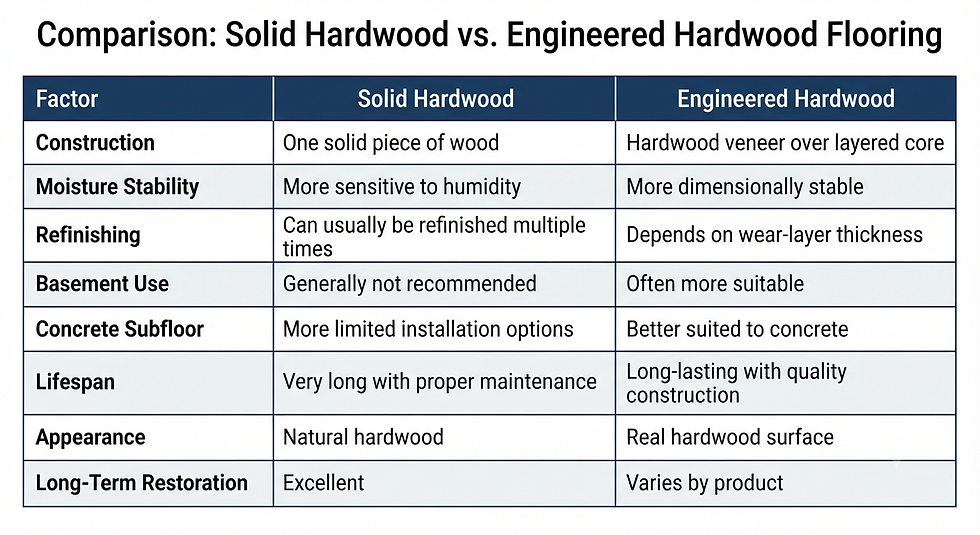
Neither option is automatically better for every home. The right choice depends on where the floor is being installed and how you plan to maintain it over the years.
What Is Solid Hardwood Flooring?
Solid hardwood flooring is made from a single piece of natural wood from top to bottom. Common species include oak, maple, hickory, and walnut.
One of the biggest advantages of solid hardwood is its longevity. Because the plank contains solid wood throughout, it can often be sanded and refinished several times during its lifespan.
This makes solid hardwood appealing for homeowners who plan to stay in their property for many years and want the ability to restore the floor when scratches, fading, or surface wear develop.
However, solid wood naturally expands and contracts as indoor humidity changes. Proper acclimation, subfloor preparation, and professional installation are therefore important.
What Is Engineered Hardwood Flooring?
Engineered hardwood has a real hardwood surface, but underneath that surface are multiple layers designed to improve dimensional stability.
Its layered construction helps reduce movement caused by changing moisture and humidity levels.
This can make engineered hardwood a practical choice for:
Basements
Concrete subfloors
Rooms with changing humidity
Radiant heating systems
Some wide-plank installations
Engineered hardwood is still real wood flooring, but the thickness of the top hardwood layer can vary considerably between products.
That difference becomes particularly important when the floor eventually needs refinishing.
How New Jersey's Climate Can Affect Hardwood Flooring
New Jersey homes experience noticeable seasonal changes throughout the year.
During humid summer months, wood can absorb moisture and expand. During winter, indoor heating can create drier conditions that cause wood to contract.
With solid hardwood, these seasonal changes may sometimes result in minor gaps, expansion, or movement if the flooring is not properly installed and maintained.
Engineered hardwood is generally more dimensionally stable because its layered core is designed to reduce expansion and contraction.
For this reason, homeowners considering hardwood flooring and installation in New Jersey should think about more than appearance. Indoor humidity, floor level, subfloor material, and room use should all be considered before selecting the flooring type.
Which Is Better for Different Areas of an NJ Home?
The best choice can depend heavily on the room.
Living Rooms and Bedrooms
Both solid and engineered hardwood can work well in living rooms, bedrooms, hallways, and other above-grade areas.
Solid hardwood may appeal more to homeowners who value long-term refinishing flexibility.
Basements
Engineered hardwood is generally the more practical option for finished basements because it handles moisture fluctuations better than traditional solid hardwood.
Before installation, however, moisture conditions should still be evaluated.
Concrete Subfloors
Engineered hardwood offers more flexible installation options over concrete.
Solid hardwood traditionally works best when installed over an appropriate wood subfloor.
Older New Jersey Homes
Many older homes already contain solid hardwood hidden beneath carpet or other flooring.
Before replacing it, homeowners may want to have the existing floor inspected. In many cases, refinishing can restore an older hardwood floor without requiring complete replacement.
Which Flooring Lasts Longer?
Solid hardwood has a strong advantage when it comes to long-term restoration.
Because it contains a thicker amount of usable wood above the tongue-and-groove system, it can often be professionally sanded and refinished multiple times.
High-quality engineered hardwood can also last for many years, but its refinishing potential depends on the thickness of the hardwood wear layer.
A thicker wear layer may allow professional sanding, while a thin veneer may only support lighter restoration methods.
This is why the quality of engineered hardwood matters just as much as its appearance.
Can Solid and Engineered Hardwood Both Be Refinished?
Yes, but not in the same way.
Solid Hardwood Refinishing
Solid hardwood is typically a strong candidate for complete sanding and refinishing.
Professional refinishing can help address:
Surface scratches
Worn finish
Dull appearance
Minor discoloration
Outdated stain color
The floor can then be restained and protected with a new finish.
Engineered Hardwood Refinishing
Engineered hardwood requires more careful evaluation.
Before sanding, a flooring professional should determine:
Wear-layer thickness
Whether the floor has been refinished previously
Depth of scratches or damage
Condition of individual boards
Aggressive sanding on a thin engineered wear layer could expose the core underneath.
This is why professional inspection matters before deciding whether engineered hardwood can safely be refinished.
Should You Refinish Existing Hardwood or Replace It?
Homeowners sometimes assume worn hardwood needs to be replaced, but that is not always necessary.
Refinishing may be the better option when:
The floor is structurally sound
The finish has become dull
Surface scratches are visible
The stain color looks outdated
Normal wear has developed over time
Replacement may be more appropriate when there is:
Extensive water damage
Severe board damage
Significant subfloor problems
Insufficient engineered hardwood wear layer
Widespread structural deterioration
A qualified flooring contractor in New Jersey can inspect the flooring and determine whether refinishing, board repair, or replacement makes the most sense.
Solid vs. Engineered Hardwood for NJ Homes: Which Should You Choose?
Choose solid hardwood if you want:
Maximum long-term refinishing potential
Traditional hardwood construction
Flooring that can potentially last for decades
Installation in suitable above-grade areas
Choose engineered hardwood if you need:
Better dimensional stability
Installation over concrete
Flooring for a finished basement
Greater flexibility in moisture-sensitive conditions
For homeowners planning hardwood flooring and installation in New Jersey, choosing solid vs. engineered hardwood for NJ homes depends on the home's construction, the room being renovated, the desired lifespan, and future refinishing plans.
Conclusion
Solid and engineered hardwood can both be excellent flooring choices for New Jersey homes. Solid hardwood stands out for its long lifespan and ability to be refinished multiple times, while engineered hardwood offers greater stability and installation flexibility in challenging areas such as basements and concrete subfloors.
If your home already has hardwood flooring, replacement may not always be necessary. A professional inspection can determine whether sanding, refinishing, repairs, or replacement is the most practical option.
VCH Flooring helps New Jersey homeowners evaluate existing wood floors and choose suitable solutions for installation, restoration, and refinishing. Working with an experienced Flooring Contractor in New Jersey can help ensure your flooring choice fits your home's condition, location, and long-term needs.


