Should You Refinish or Replace Your Hardwood Floors Before the Holidays
Updated: 5 days ago

The holidays are a time for family gatherings, festive dinners, and welcoming guests into your home. If your hardwood floors look scratched, dull, stained, or worn, you may be wondering whether to refinish them or invest in new flooring before the celebrations begin.
Choosing between hardwood floor refinishing vs. replacement depends on the condition of your existing floors, your budget, and how much time you have before your guests arrive. Refinishing can restore the appearance of hardwood that is still in good condition, while replacement may be necessary when the flooring has extensive damage.
For New Jersey homeowners, making this decision early can help you plan the project, compare options, and prepare your home for the holiday season.
Hardwood Floor Refinishing vs. Replacement: What's the Difference?
Hardwood floor refinishing involves preparing the existing wood surface and applying a new finish to improve its appearance. Depending on the floor's condition, the process may include sanding, staining, and applying a protective coating.
Replacement involves removing some or all of the existing flooring and installing new materials. This option provides an opportunity to change the wood type, plank style, color, or overall appearance of a room.
Both options can improve your home's interior, but the right choice depends on the problems you are trying to solve.
Refinishing may be suitable when the wood is structurally sound but has surface scratches, fading, or a worn finish. Replacement may be a better option when the boards have severe damage, persistent moisture problems, or insufficient material remaining for refinishing.
5 Signs Your Hardwood Floors Can Be Refinished
Before deciding to replace your floors, consider whether the existing wood can be restored. Here are five signs that refinishing may be worth exploring.
1. Surface Scratches and Scuff Marks
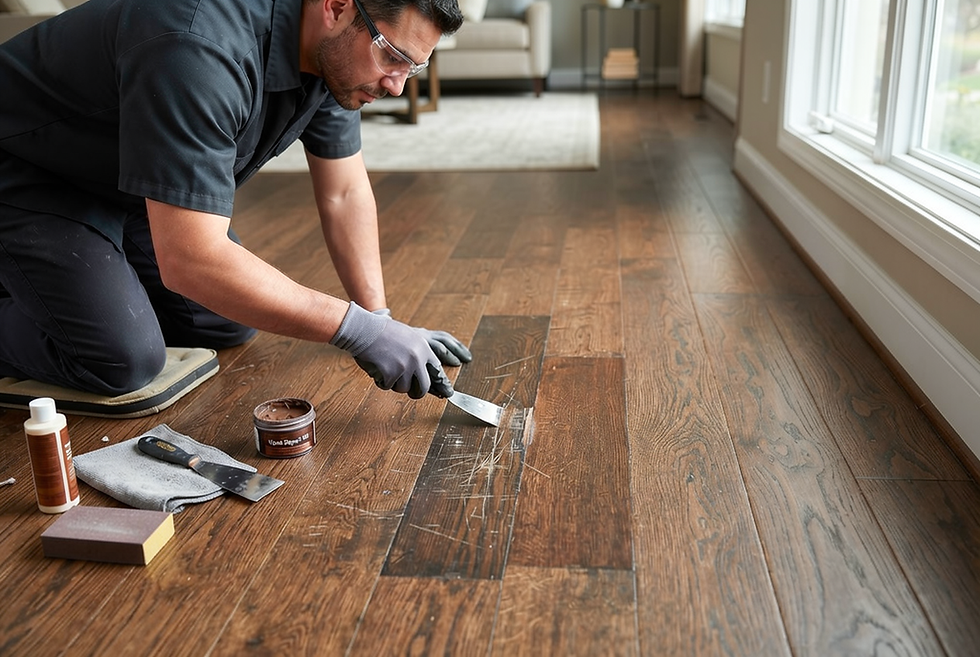
Daily foot traffic, moving furniture, and pets can leave scratches and scuff marks on hardwood floors. If the damage is mainly on the finish and the wood underneath remains in good condition, refinishing may improve the appearance.
However, deeper scratches that penetrate the wood may require additional repairs before the finish is applied.
2. Dull or Worn Finishes
Hardwood floors can lose their shine over time, particularly in hallways, living rooms, and other high-traffic areas. If the finish looks uneven or worn, a professional can assess whether a maintenance coat or full refinishing is appropriate.
A new finish can help protect the wood and refresh the overall appearance of the room.
3. Faded or Outdated Floor Color
If your hardwood floors look faded or no longer suit your interior design, refinishing may offer an opportunity to change their appearance. Depending on the wood species and condition, a different stain color may be possible.
This can be a practical way to update your home before holiday gatherings without installing an entirely new floor.
4. Minor Surface Imperfections
Small imperfections do not always mean that your hardwood floors need replacement. Some surface issues can be addressed through sanding, refinishing, or localized repairs.
The appropriate method depends on the depth of the damage and the type of flooring.
5. Structurally Sound Hardwood Boards
The most important consideration is the condition of the wood itself. If the boards are stable, dry, and have sufficient material remaining for the proposed refinishing process, restoring them may be a practical option.
For professional guidance, explore hardwood floor refinishing in New Jersey to learn more about VCH Flooring's refinishing and restoration services.
When Should You Replace Your Hardwood Floors?
Although refinishing can address many cosmetic issues, some flooring problems require more extensive work. Replacement may be worth considering in the following situations.
Severe Water Damage or Warped Boards
Water intrusion can cause hardwood boards to swell, cup, buckle, or warp. If moisture damage is extensive, refinishing alone will not resolve the underlying problem.
The source of moisture should be identified and corrected before deciding whether the affected boards can be repaired or need replacement.
Deep Stains and Extensive Wood Damage
Some stains and discoloration extend deep into the wood and may remain visible even after sanding. Extensive cracks, broken boards, or significant deterioration can also make restoration more complicated.
A professional assessment can help determine whether localized board replacement or a completely new floor is more appropriate.
Repeated Repairs or Uneven Flooring
If your floors have required frequent repairs or show signs of movement, instability, or subfloor problems, another cosmetic treatment may not be enough. The underlying cause should be investigated before choosing the next step.
Insufficient Material for Refinishing
Solid hardwood can generally be refinished multiple times, depending on its thickness and previous sanding history. Engineered hardwood has a real-wood wear layer that varies by product, so not every engineered floor can be sanded safely.
When the remaining wood layer is too thin or the floor is otherwise unsuitable for refinishing, replacement may be the better option.
If a new floor is needed, hardwood floor installation in New Jersey is a relevant starting point for exploring your options with VCH Flooring.
Is Refinishing Cheaper Than Replacing Hardwood Floors?
In many cases, refinishing is less expensive than replacing hardwood flooring because it uses the existing floor and avoids the full cost of removing and installing new materials.
However, the final cost depends on several factors.
Factors affecting refinishing costs:
Total square footage of the flooring.
Amount of sanding and surface preparation required.
Condition of the existing boards.
Stain and finish selection.
Repairs needed before refinishing.
Accessibility of the work area.
Factors affecting replacement costs:
Cost and type of new flooring materials.
Removal and disposal of the existing floor.
Subfloor repairs or preparation.
Installation complexity and room layout.
Trim, transitions, and finishing work.
Furniture movement and project access.
For homeowners comparing hardwood floor refinishing vs. replacement cost, the best approach is to request estimates based on the actual condition of the floor rather than choosing an option based on general price comparisons alone.
A professional assessment can help clarify whether restoring the existing wood offers better value or whether replacement is a more practical long-term solution.
How Long Does Each Option Take Before the Holidays?
Project timing is especially important when you want your home ready for Thanksgiving or Christmas. The total time required depends on the size of the area, the condition of the floor, the selected finish, and the amount of repair work needed.
How Long Does Hardwood Floor Refinishing Take?
Refinishing often takes several days of active work, but the complete timeline also includes drying and curing. The finish manufacturer's instructions determine when the floor can safely handle foot traffic, furniture, and area rugs.
Before booking, ask your contractor about:
Preparation and sanding time.
Number of coats required.
Drying time between coats.
When normal foot traffic can resume.
When furniture and rugs can be returned.
How Long Does Hardwood Floor Replacement Take?
Replacement involves additional steps, including removing the existing flooring, preparing the subfloor, installing new materials, and completing the finishing details.
The project may take longer if the subfloor needs repairs, materials are not immediately available, or the layout requires detailed installation work.
When Should You Schedule Your Flooring Project?
If guests are arriving soon, arrange an assessment as early as possible. Allow time for the contractor's availability, material selection, repairs, installation or refinishing, and any required curing period.
Avoid scheduling the project based only on the number of workdays quoted. Your floor must be ready for normal use before furniture, rugs, and holiday decorations are put back in place.
Is There a Third Option? Repair, Recoat, or Refinish
Refinishing and replacement are not the only possible solutions. Depending on the condition of your hardwood floors, a more targeted treatment may be sufficient.
Screen and Recoat
If the wood is in good condition and the primary issue is a worn surface finish, a maintenance coat may be an option. A screen-and-recoat process lightly abrades the existing finish before applying another coat, without fully sanding the floor down to bare wood.
This method is not suitable for every floor, particularly when the existing finish is failing or the wood has deep damage.
Replace Individual Boards
If damage is limited to a few boards, localized replacement may be possible. This can preserve most of the existing flooring while addressing specific damaged areas.
The feasibility depends on the floor's construction, board availability, the extent of the damage, and how closely the replacement boards can be matched.
Repair and Refinish
Some floors benefit from a combination of board repairs and refinishing. This approach may be appropriate when the majority of the floor is sound but certain sections need additional attention.
A professional inspection can help identify the most practical solution for your home's condition and timeline.
How to Choose the Right Option for Your New Jersey Home
Before making a decision, consider these five questions:
What is the extent of the damage? Surface wear may be treatable, while serious moisture or structural problems require further investigation.
What type of flooring do you have? Solid hardwood and engineered hardwood have different refinishing limitations.
What is your budget? Compare estimates that include preparation, repairs, materials, and finishing work.
How much time do you have? Consider the full schedule, including drying and curing, rather than just the active work.
What result do you want? If you like your existing wood and layout, refinishing may be sufficient. If you want a different floor style or the current flooring cannot be restored, replacement may be more appropriate.
You can also review VCH Flooring's hardwood flooring projects for inspiration when considering an update to your home's flooring.
The right decision should balance appearance, floor condition, project cost, and long-term performance rather than focusing on the holiday deadline alone.
Frequently Asked Questions
Is it worth refinishing hardwood floors before Thanksgiving?
It can be worthwhile if the wood is in suitable condition and there is enough time to complete the work and allow the finish to dry and cure as required. Arrange an assessment early to determine whether the schedule is realistic.
Can hardwood floors be refinished in one week?
Some projects can be completed within a week, but the timeline depends on the floor's condition, the size of the area, the finishing system, and the required curing period. Confirm the expected schedule with your contractor before booking.
Can damaged hardwood floors be refinished?
Some damaged floors can be restored, particularly when the issues are limited to the surface finish. Severe water damage, warped boards, deep stains, or structural problems may require repairs or replacement.
Is refinishing hardwood floors cheaper than replacing them?
Refinishing is often less expensive when the existing wood is in good condition. Replacement may cost more because it can involve removal, new materials, installation, and subfloor preparation. The actual difference depends on the project.
How long should I wait before moving furniture back after refinishing?
The waiting period depends on the finish product and the contractor's instructions. Drying enough to walk on the floor does not necessarily mean the finish has fully cured. Follow the specified guidance for furniture, rugs, and normal use.
Should I refinish or replace engineered hardwood floors?
The decision depends on the thickness and condition of the real-wood wear layer, the product specifications, and the extent of the damage. Some engineered hardwood floors can be refinished, while others cannot be safely sanded.
Get Your Hardwood Floors Ready for the Holiday Season
Worn or damaged hardwood floors do not automatically need to be replaced. In many homes, refinishing or targeted repairs can improve the appearance of the existing flooring. In other cases, replacement may offer a more suitable long-term solution.
The key is to understand your floor's condition and plan the work around your budget and holiday schedule.
If you're preparing your New Jersey home for Thanksgiving or Christmas, contact VCH Flooring to discuss your hardwood flooring needs and determine the most suitable next step for your space.