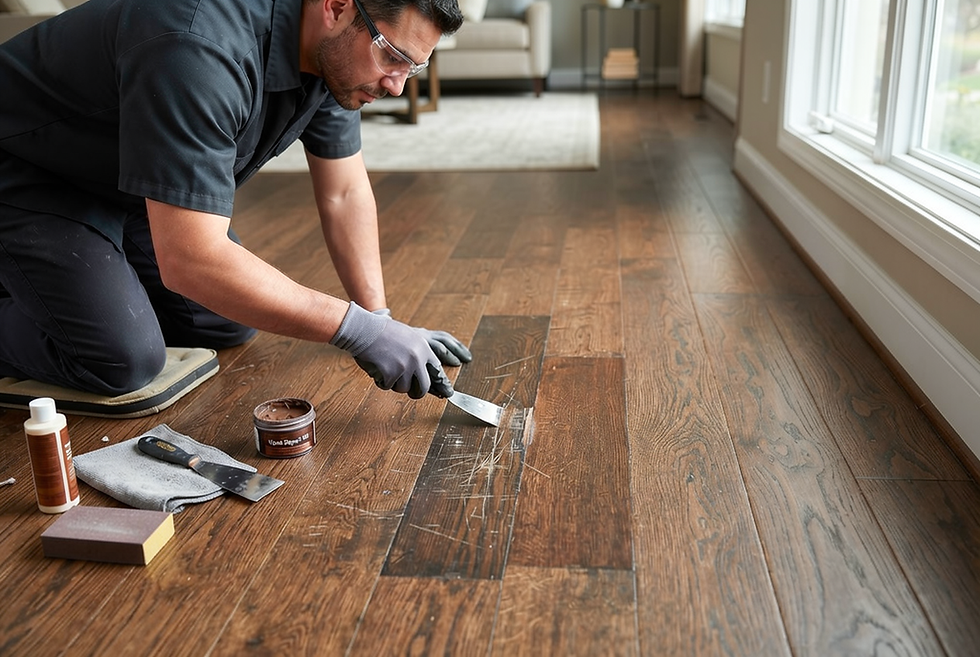
Why Subfloor Preparation Matters Before Installing Hardwood Floors.

Updated: 5 days ago

Hardwood flooring adds warmth and character to a home, but its performance depends on the surface underneath it. Even carefully installed boards can develop problems when the subfloor has excess moisture, uneven areas, or loose panels.
Subfloor preparation for hardwood flooring helps establish a clean, dry, flat, and structurally sound base. It also gives the installer an opportunity to identify problems before new flooring makes them harder to reach.
For New Jersey homeowners planning a flooring project, understanding this stage can help with comparing estimates, asking useful questions, and avoiding preventable repairs.
What Is a Subfloor?
The subfloor is the supporting surface beneath your finished flooring. Depending on the home’s construction, hardwood may be installed over plywood, oriented strand board (OSB), or an approved concrete-based system.
Underlayment is a separate layer used for a specific purpose, such as sound control or moisture management. It does not automatically correct an uneven or damaged subfloor.
Before installation begins, the supporting surface must meet the requirements of the selected hardwood product and installation method.
Why Subfloor Preparation Matters for Hardwood Flooring
It Gives Hardwood Boards Consistent Support
Dips, ridges, and raised panel seams can leave parts of the flooring inadequately supported. Depending on the installation system, boards may move underfoot or place stress on connections.
A flat surface helps the flooring sit as intended. Flatness is different from level: a floor can have a gradual slope while remaining flat, or appear level while containing localized dips.
The installer should measure subfloor flatness against the flooring manufacturer’s requirements rather than judge the surface by appearance alone.
It Helps Identify Moisture Problems
Wood responds to changes in moisture. Unsuitable conditions beneath the flooring can contribute to swelling, cupping, or other movement.
A surface that looks dry may still require attention. Subfloor moisture testing helps establish whether conditions are suitable before installation.
Testing methods differ for wood and concrete. Acceptable results also depend on the flooring, adhesive, and moisture-control system being used. Unusual readings should be investigated and addressed before the floor is covered.
It Allows Loose or Damaged Areas to Be Addressed
A structurally sound subfloor provides stable support for the finished floor. Loose panels, damaged edges, and deteriorated sections need assessment before installation.
Squeaks can indicate movement, but they do not identify the cause by themselves. The installer should determine which part of the floor assembly is moving before recommending a repair.
Covering an existing problem with new hardwood can make later access more disruptive.
It supports the selected installation method.
Nail-down, glue-down, and floating floors place different demands on the supporting surface.
Mechanical fasteners need a suitable base. Glue-down systems require a properly prepared bonding surface. Floating floors still need appropriate support and flatness beneath them.
Preparation materials must also work with the complete installation system. A patching product suitable for one application may be unsuitable for another.
What Should Be Checked Before Installation?
A useful inspection covers five areas:

Ask the installer to explain any failed checks and the proposed correction before preparation work begins.
When Does a Subfloor Need Repair or Replacement?
Some conditions may allow a localized repair. Others can require replacement of affected sections or assessment of the supporting structure.
Warning signs include soft spots, swollen panel edges, separation between panel layers, recurring dampness, and noticeable movement underfoot.
The right response depends on the cause and extent of the problem. For example, replacing a moisture-damaged panel without addressing the moisture source can leave the new material exposed to the same conditions.
Where structural movement is suspected, surface patching alone may not resolve the underlying issue.
How Preparation Differs for Wood and Concrete
Wood subfloors need checks for panel condition, fastening, moisture, and suitability for the chosen installation method.
Concrete requires appropriate moisture evaluation, surface preparation, and assessment of any cracks or contaminants. The selected adhesive or flooring system may have additional requirements.
These differences also matter when planning engineered hardwood installation. Engineered products offer different installation options, but they still require a suitable supporting surface.
When preparing a subfloor for hardwood in New Jersey, base the preparation plan on the home’s actual conditions and the selected product’s instructions.
What Affects Preparation Costs and Timing?
Subfloor preparation cost before hardwood installation depends on the work required after the existing floor is inspected or removed.
Common cost drivers include removal and disposal, the area requiring correction, panel replacement, moisture-related work, and preparation materials.
Timing can also depend on drying, product curing, and follow-up testing. A fixed installation date should allow for unresolved conditions discovered during preparation.
Request an estimate that separates known preparation work from additional work that may become necessary after removal. It should also explain how those changes will be priced and approved.
Questions to Ask Your Installer
Before approving the project, ask:
How will you check flatness and moisture?
Which preparation work is included in the estimate?
What happens if damaged sections are uncovered?
Are the preparation materials approved for my flooring system?
Will you recheck the surface before installation?
For a broader hiring checklist, review these questions to ask a wood flooring contractor.
Frequently Asked Questions
Can you install hardwood over an uneven subfloor?
The surface must meet the selected flooring system’s flatness requirements. Areas outside those requirements need an appropriate correction before installation.
Does underlayment fix subfloor problems?
Underlayment serves specific functions. It should not be treated as a general repair for damaged panels, excessive movement, or significant unevenness.
Does a dry-looking concrete slab need moisture testing?
Yes. Appearance alone does not establish moisture suitability. Follow the testing requirements for the flooring and installation system.
Should a subfloor be repaired or replaced?
That depends on its condition and the cause of the damage. An inspection should establish whether localized repairs are sufficient or affected sections need replacement.
Is subfloor preparation included in installation pricing?
Check the written estimate. Confirm which inspections, repairs, materials, and disposal charges are included and how unexpected conditions will be handled.
Start With a Suitable Base
Subfloor preparation helps establish the conditions hardwood needs to perform well. Before installation, confirm that the surface has been inspected, necessary corrections are complete, and test results meet the selected system’s requirements.
If you are planning hardwood floor installation in New Jersey, discuss preparation requirements with VCH Flooring when requesting your estimate.