Luxury Vinyl Plank Flooring in New Jersey | VCH Flooring

Updated: Sep 9

If you're choosing hardwood flooring for a New Jersey home, there isn't one option that is best for every homeowner. The right choice depends on where the floor will be installed, moisture conditions, household traffic, pets and children, desired appearance, maintenance expectations, and budget. Solid hardwood and engineered hardwood can both be excellent choices when matched to the right application. Wood's moisture content and dimensional behavior are important considerations when selecting and installing hardwood flooring.
What Should New Jersey Homeowners Consider Before Choosing Hardwood Flooring?
New Jersey homes experience changing environmental conditions throughout the year, so homeowners should consider more than appearance when selecting hardwood. Moisture exposure, subfloor conditions, room location, and expected foot traffic can all influence the appropriate flooring choice.
For example, a main living area with a stable subfloor may have different requirements from a basement or an area where moisture conditions are more difficult to control. Wood naturally responds to changes in moisture, which can affect its dimensions and performance.
Before choosing a product, consider:
Where the flooring will be installed
The condition and type of subfloor
Moisture and humidity conditions
Household traffic
Children and pets
Desired wood species and finish
Maintenance and refinishing expectations
Solid vs. Engineered Hardwood Flooring: Which Is Better for New Jersey?
Solid Hardwood Flooring
Solid hardwood is made from a single piece of wood and is a traditional choice for residential flooring. It offers a natural appearance and can generally be refinished multiple times over its usable life, depending on its thickness and condition. It can be a good option for suitable above-grade areas where the installation environment is appropriate.
Engineered Hardwood Flooring
Engineered hardwood consists of a real wood surface supported by multiple layers. Its construction can make it a practical option for certain applications where dimensional stability and installation conditions are important.
For homeowners considering engineered flooring in New Jersey, the appropriate product still depends on the specific room, subfloor, moisture conditions, and installation method.
Which One Should You Choose?
There is no universal winner. Solid hardwood may appeal to homeowners prioritizing traditional construction and long-term refinishing, while engineered hardwood can be worth considering when the home's conditions or installation requirements make its construction more suitable.
What Is the Best Hardwood Species for New Jersey Homes?
White Oak Hardwood Flooring
White oak is a versatile option for homeowners who want a durable wood with a distinctive grain and a wide range of finishing possibilities. Its appearance works with both traditional and contemporary interiors, making white oak hardwood flooring a popular consideration for many residential applications.
Red Oak
Red oak offers a classic hardwood appearance with prominent grain patterns. It can be a practical choice for homeowners who prefer a traditional look and want a well-established hardwood species.
Hickory and Maple
Hickory is worth considering for homeowners who prioritize hardness and durability, particularly in busy areas. Maple offers a different grain and appearance and can work well for homeowners seeking a cleaner, more consistent visual style.
Ultimately, the best hardwood species for New Jersey homes depends on your priorities. Consider traffic, appearance, maintenance, budget, and the type of wear the floor is expected to handle.
Which Hardwood Flooring Is Best for Your Lifestyle and Home?
The right flooring can also depend on how your household uses each room.
For homes with kids and pets: Look for a suitable species and finish that can handle everyday activity, while keeping in mind that no natural hardwood is completely scratch-proof. Regular cleaning and appropriate maintenance remain important.
For high-traffic areas: Consider species and flooring construction with durability in mind. Durable hardwood flooring for high-traffic areas should be selected based on the expected level of wear rather than species alone.
For basements or concrete subfloors: Don't choose flooring based only on appearance. Subfloor conditions, moisture levels, installation method, and the flooring's construction should be evaluated before installation.
How Do Installation and Maintenance Affect Your Flooring Choice?
Choosing the right hardwood is only part of getting a floor that performs well. Proper preparation and installation are also important. The subfloor should be evaluated, moisture conditions considered, and the appropriate installation method selected for the flooring and location.
Professional hardwood flooring installation in New Jersey can help ensure that the selected flooring is installed according to the product requirements and the conditions of the home.
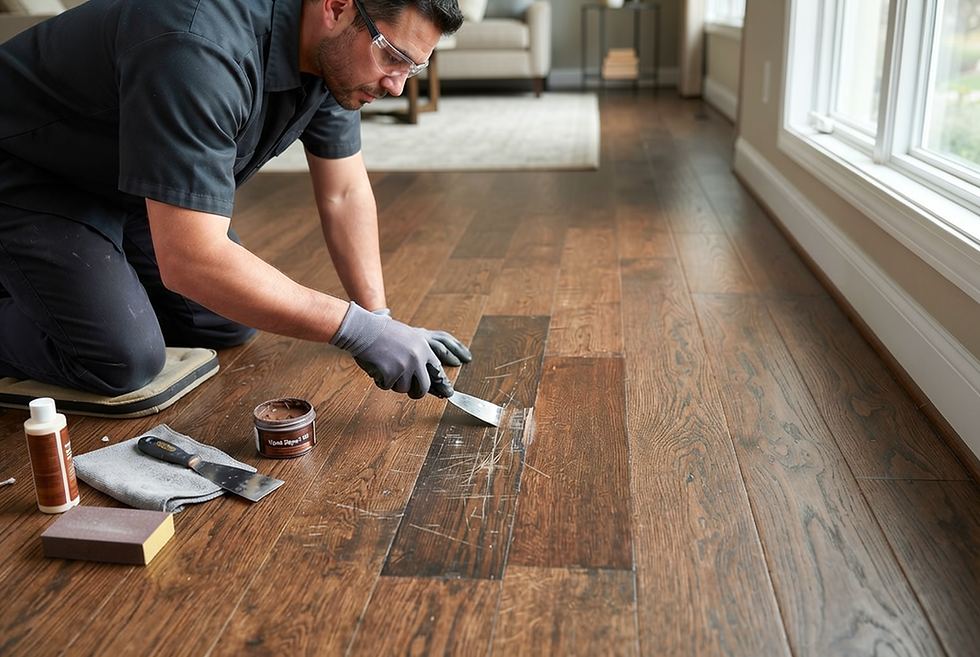
Long-term maintenance also matters. Depending on the flooring's construction and condition, refinishing may help restore the appearance of an existing hardwood floor rather than replacing it entirely. Hardwood floor refinishing and restoration can address issues such as worn finishes, scratches, stains, and other surface damage.
So, What Is the Best Hardwood Flooring for a New Jersey Home?
For many homeowners, white oak can be a versatile choice because of its appearance, durability, and finishing flexibility. However, the best flooring depends on the specific home. Solid hardwood may be appropriate when traditional construction and refinishing potential are priorities, while engineered hardwood may be better suited to certain installation conditions.
The best choice is the one that fits your room, subfloor, moisture conditions, lifestyle, appearance preferences, and long-term maintenance goals. If you're comparing options or planning a new installation, working with an experienced Flooring Contractor in New Jersey can help you evaluate your home's specific requirements. VCH Flooring can help New Jersey homeowners select and install hardwood flooring suited to their space and needs.
Frequently Asked Questions
Is solid or engineered hardwood better for a New Jersey home?
Neither is universally better. Solid and engineered hardwood have different constructions and may be appropriate for different rooms and installation conditions. Your subfloor, moisture conditions, location, and refinishing preferences should all be considered.
Is white oak a good choice for New Jersey homes?
White oak can be a versatile choice for many homes because of its appearance, grain, and finishing options. However, the suitability of any hardwood depends on the room, installation conditions, household use, and homeowner preferences.
What is the most durable hardwood flooring for high-traffic areas?
Species hardness is one factor, but durability also depends on flooring construction, finish, installation quality, maintenance, and the amount of traffic. Hickory is one species homeowners may consider when hardness is a priority.
Is hardwood flooring suitable for homes with pets and children?
Yes, hardwood can work well in homes with children and pets, but homeowners should have realistic expectations about scratches and wear. Species, finish, maintenance, and household activity should all be considered when choosing flooring.
What should I consider before installing hardwood flooring in New Jersey?
Consider the room location, subfloor condition, moisture levels, flooring construction, wood species, installation method, household traffic, maintenance requirements, and overall budget before making a final selection.