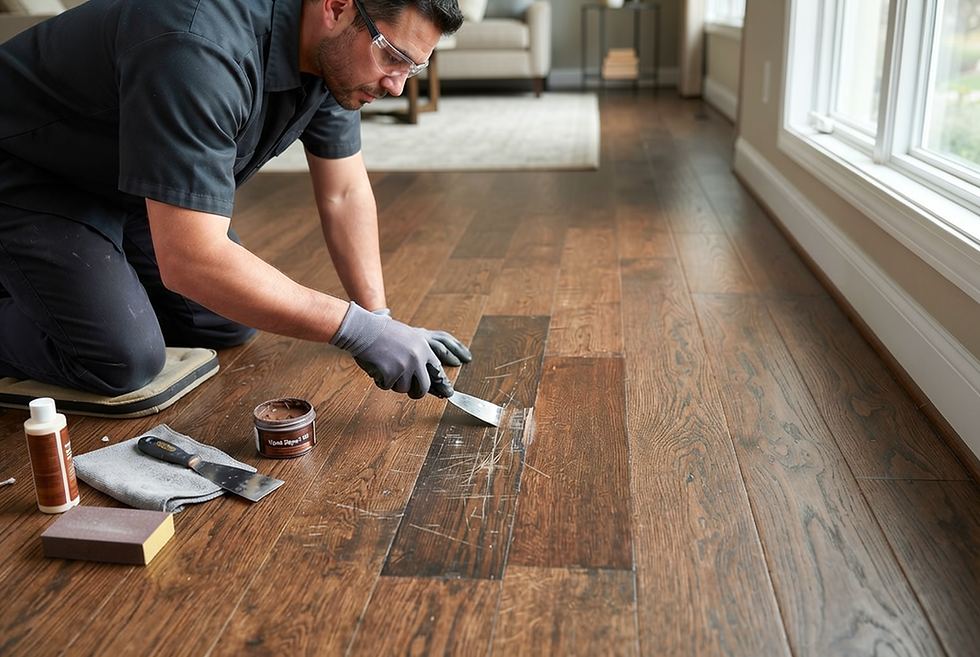
Winter Hardwood Floor Damage in New Jersey

Updated: Sep 9

Hardwood floors add timeless beauty and value to any home, but winter in New Jersey can be especially harsh on them. Snow, salt, moisture, and constant indoor traffic all contribute to wear and tear that becomes visible by early spring. If your floors look dull, scratched, or uneven, you are not alone. Understanding the causes of winter damage and knowing how to fix it in spring can help you restore your floors and protect your investment.
Why Winter Is Tough on Hardwood Floors
During winter, your floors go through extreme conditions. Cold outdoor temperatures combined with heated indoor air create fluctuations that affect wood. Hardwood is a natural material that expands and contracts with changes in humidity and temperature, making it vulnerable during seasonal transitions.
In homes across New Jersey, winter often brings:
Snow and ice tracked indoors
Salt and deicing chemicals
Increased indoor foot traffic
Low indoor humidity from heating systems
These factors can lead to both cosmetic and structural damage if not addressed in time.
Common Causes of Winter Damage
1. Moisture and Water Exposure
Snow and ice brought inside on shoes can melt and seep into the wood. Over time, this moisture can cause:
Warping or cupping
Stains and discoloration
Weakening of the wood structure
Water damage is one of the most serious issues homeowners face during winter.
2. Salt and Chemical Residue
Salt used to melt ice can be abrasive and damaging to hardwood surfaces. It leaves behind residue that:
Scratches the finish
Causes dullness
Breaks down protective coatings
Without proper cleaning, salt buildup can significantly reduce the lifespan of your flooring.
3. Dry Indoor Air
Heating systems reduce indoor humidity levels, which can cause wood to shrink. This leads to:
Gaps between planks
Cracking
Splitting
These issues are common in winter and can worsen if humidity levels are not controlled.
4. Heavy Foot Traffic
With colder weather, families spend more time indoors. This increases foot traffic, especially in entryways and living areas. Dirt, debris, and grit act like sandpaper, wearing down the finish of your floors.
5. Temperature Fluctuations
Frequent changes between cold outdoor air and warm indoor temperatures cause expansion and contraction in hardwood. This can weaken joints and lead to long-term structural issues.
Signs Your Hardwood Floors Need Attention
By the time spring arrives, many homeowners notice visible signs of damage. These may include:
Scratches and scuff marks
Dull or faded finish
Warped or uneven boards
Gaps between planks
Stains or discoloration
If you notice any of these issues, it is time to consider professional solutions like hardwood flooring and installation in New Jersey to restore or upgrade your floors.
Spring Fixes for Winter-Damaged Hardwood Floors
Spring is the perfect time to repair and restore your floors. The moderate weather conditions allow for better drying and finishing, making repairs more effective.
1. Deep Cleaning and Maintenance
Start with a thorough cleaning to remove salt, dirt, and residue. Use proper hardwood cleaning products to avoid further damage. This step helps reveal the true condition of your floors.
2. Refinishing Hardwood Floors
Refinishing is one of the most effective ways to fix surface damage. It involves sanding down the top layer and applying a new finish. This process:
Removes scratches and stains
Restores shine and color
Adds a protective layer
Many homeowners choose hardwood flooring and installation in New Jersey professionals to ensure high-quality refinishing results.
3. Repairing Damaged Boards
If certain areas are severely damaged, individual boards may need repair or replacement. This is especially important for:
Warped planks
Deep cracks
Water-damaged sections
Professional assessment ensures the right solution is applied.
4. Controlling Indoor Humidity
Maintaining proper humidity levels is essential to prevent future damage. Using a humidifier can help keep wood stable and reduce gaps or cracks.
5. Upgrading Your Flooring
In some cases, damage may be too extensive for simple repairs. Upgrading to new flooring can be a better long-term solution. Options like engineered wood or modern finishes offer improved durability.
Working with experts in hardwood flooring and installation in New Jersey ensures you choose the right materials for your home and climate.
Preventing Future Winter Damage
Once your floors are restored, taking preventive measures can help protect them during the next winter season:
Place mats at entryways to trap moisture and dirt
Remove shoes indoors to reduce salt and debris
Clean spills immediately
Maintain consistent indoor humidity
Schedule regular maintenance
These simple steps can significantly extend the life of your hardwood floors.
Why Professional Help Matters
While minor issues can be handled with basic maintenance, major repairs require professional expertise. Skilled contractors understand how to handle seasonal damage and provide long-lasting solutions.
Choosing experienced providers of hardwood flooring and installation in New Jersey ensures:
Proper assessment of damage
High-quality materials and finishes
Durable and aesthetically pleasing results
Increase Home Value with Restored Floors
Well-maintained hardwood floors are a major selling point in the New Jersey real estate market. Restoring your floors not only improves your living space but also increases your property’s value.
Buyers are more likely to be attracted to homes with polished, damage-free flooring. Investing in repairs during spring can give you a competitive edge.
FAQs
1. Can winter damage hardwood floors permanently?
Yes, severe moisture or structural damage can be permanent, but most surface issues can be repaired with refinishing.
2. When is the best time to fix winter floor damage?
Spring is ideal because of stable temperature and humidity conditions.
3. How do I know if my floors need refinishing?
If you notice scratches, dullness, or discoloration, refinishing is likely needed.
4. Can damaged boards be replaced instead of refinishing the entire floor?
Yes, individual boards can be repaired or replaced depending on the extent of damage.
5. How can I prevent winter damage in the future?
Use mats, control humidity, clean regularly, and avoid bringing moisture indoors.
Conclusion
Winter can take a serious toll on hardwood floors, but the good news is that most damage can be repaired with the right approach. From moisture issues to surface scratches, understanding the causes helps you take timely action. Spring is the perfect time to restore your floors and prepare your home for the months ahead.
For reliable solutions, trust a professional Flooring Company in New Jersey like VCH
Flooring. Their team specializes in restoring and upgrading hardwood floors with precision and care. Whether you need repairs or complete hardwood flooring and installation in New Jersey, they deliver high-quality results tailored to your needs.
To get started, contact VCH Flooring at info@vchflooring.com or call 856-393-1310 for expert advice and a free estimate.